Specialized hydronic boiler repair and installation from Top Shelf
- No-heat and uneven-heating diagnosis
- Circulator and zone-control service
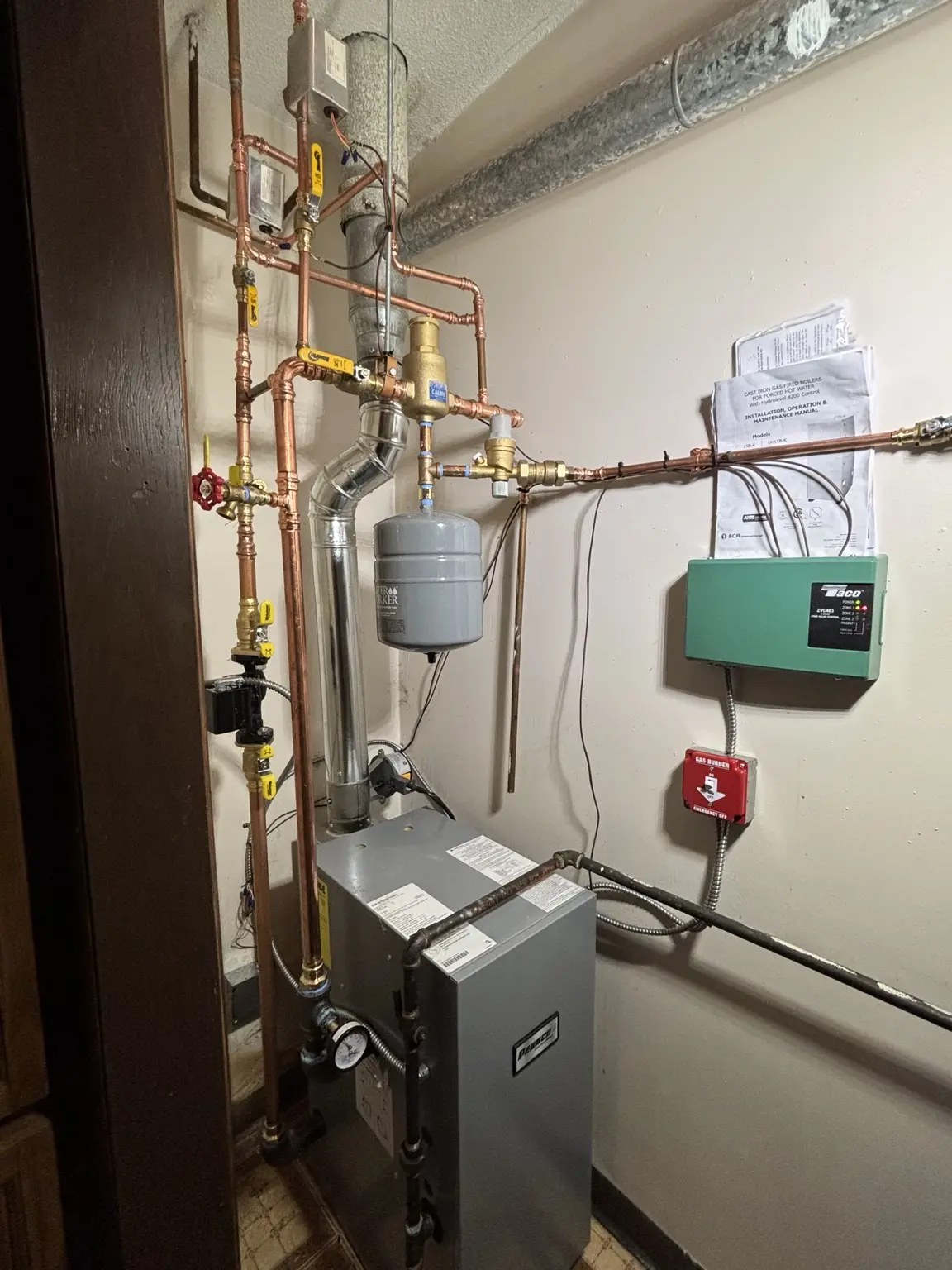
- Expansion tanks and pressure-reducing valves
- Air elimination and system purging
- Baseboard, radiator, and zone balancing
- Relief-valve and high-pressure diagnosis
- Indirect water-heater integration
- Cast-iron and high-efficiency boiler replacement
- Hydronic boiler repiping and system upgrades
Diagnose no heat by following the complete circuit
A cold zone or noisy loop may be caused by trapped air, low fill pressure, a failed circulator, a closed valve, a thermostat or zone-control problem, a restriction, or a boiler that is not receiving the correct call. Greg checks the control sequence, pressure, temperature, flow, and connected emitters before recommending parts.
Control pressure, air, and expansion
Hydronic water expands as it heats. An improperly charged or failed expansion tank, a fill-valve problem, poor air elimination, or an incorrect circulator relationship can create pressure swings, relief-valve discharge, noise, and recurring air problems. The cause and the safety valve are evaluated together.
Repair or replace based on system condition
A sound boiler with a failed circulator, zone valve, control, expansion tank, or leaking accessible connection may be repairable. Active boiler-section leakage, repeated failures, severe corrosion, unsafe venting, obsolete equipment, or a poorly matched system may justify replacement. The scope follows the condition found rather than boiler age alone.
Hydronic boiler installation and repiping
Replacement planning considers the building load, radiation, zone sizes, operating temperatures, fuel and venting, water quality, existing piping, and domestic-hot-water demand. New piping is arranged for dependable circulation, air removal, expansion control, purging, isolation, and future service.
Traditional, condensing, and indirect systems
Cast-iron boilers and high-efficiency condensing boilers have different flow, return-temperature, venting, condensate, and maintenance requirements. Indirect water heaters also need appropriate boiler capacity, priority controls, piping, and recovery planning. Top Shelf matches the equipment and controls to the building instead of forcing every home into one design.