
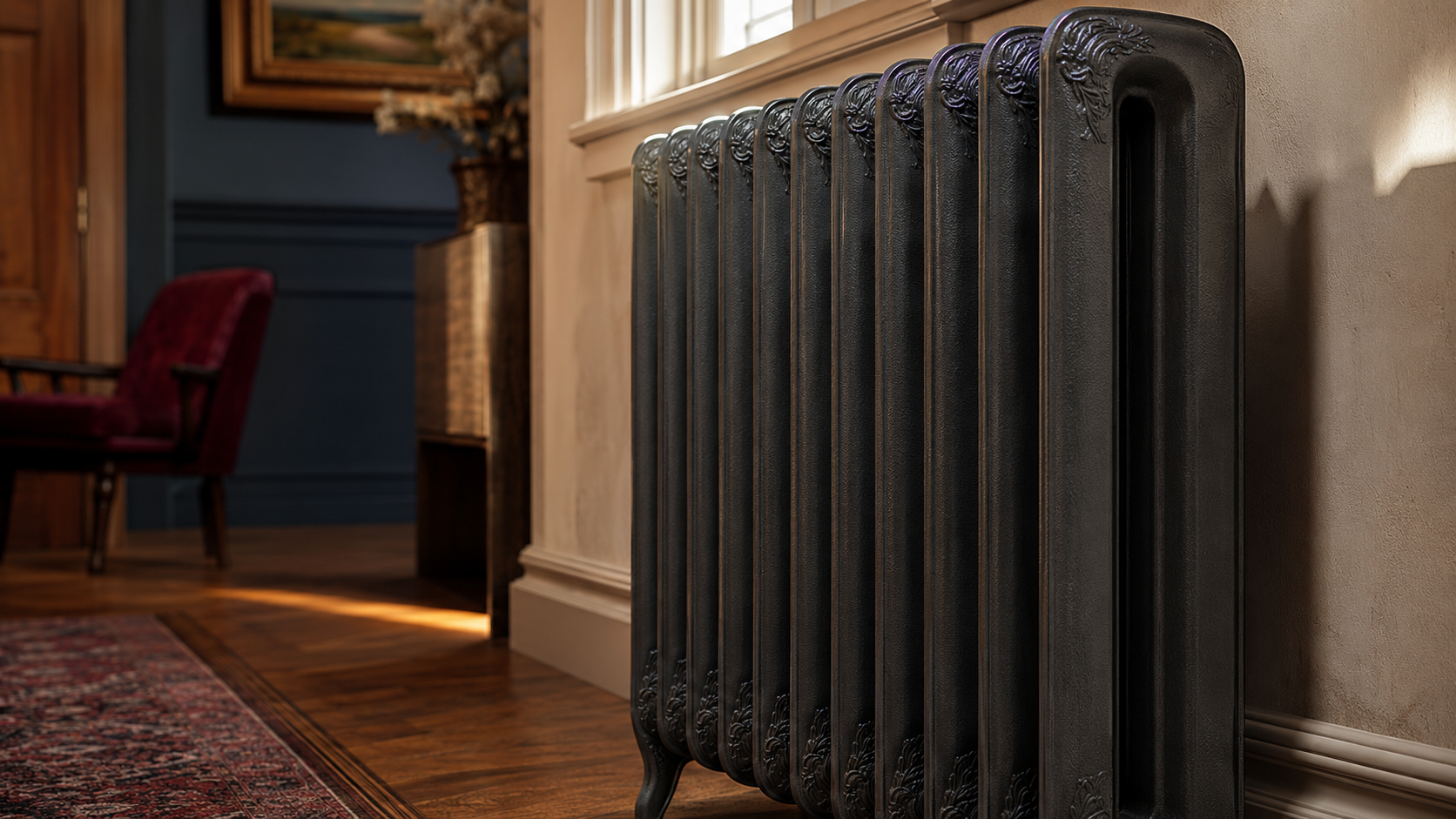
A cold radiator does not automatically mean the radiator itself has failed. Air movement, valve position, pipe pitch, trapped air, system pressure, circulation, and balancing all affect whether heat reaches an individual room.
This guide is based on Greg’s field experience diagnosing and repairing plumbing, steam, and hydronic systems in Scranton-area homes. Site conditions and equipment instructions control the final recommendation.
One-pipe steam radiator checks
The supply valve should normally be fully open or fully closed, and the radiator should pitch slightly toward the valve so condensate can drain. A failed air vent, blocked valve, incorrect vent size, pooled water, or inadequate main venting can delay or prevent heating.
Hydronic radiator and baseboard checks
Hot-water systems depend on circulation. Air in the loop, a closed valve, failed zone control, weak circulator, incorrect balancing, low system pressure, or a blockage can leave one emitter cold while the rest of the building heats.
Balance the system instead of chasing one room
Installing the fastest possible vent or increasing boiler temperature can create new problems elsewhere. The goal is to move steam or hot water through the entire system in a controlled, balanced way.
Steam Heating Systems Scranton, PA
Steam heating system service in Scranton, PA for one-pipe and two-pipe systems, radiators, mains, vents, returns, pitch, pressure, and distribution problems.
Frequently asked questions
Should I bleed a steam radiator?
No. Steam radiators use vents and condensate drainage; they are not bled like hot-water radiators.
Can furniture stop a radiator from heating?
It can restrict heat transfer to the room, but it will not usually prevent the radiator itself from becoming hot.