Specialized boiler installation and replacement from Top Shelf
- Steam boiler connected-radiation surveys
- Hydronic heat-loss and system evaluations
- Gas and oil boiler replacement planning
- Indirect water-heater integration and priority zoning
- Steam headers, risers, equalizers, and Hartford Loops
- Hydronic circulators, expansion, zoning, and air elimination
- Approved venting and combustion-air evaluation
- System flushing, skimming, purging, and startup
- Control testing and homeowner operating review
Explore steam repair, replacement, maintenance, or Scranton service information.
Correct sizing comes first
Steam boilers are sized to the connected radiation—not simply the home’s square footage or the old boiler rating. Hydronic replacements should reflect the building load and the way the zones actually operate. Oversizing can increase cycling, noise, fuel use, and maintenance problems.
Piping matters as much as the boiler
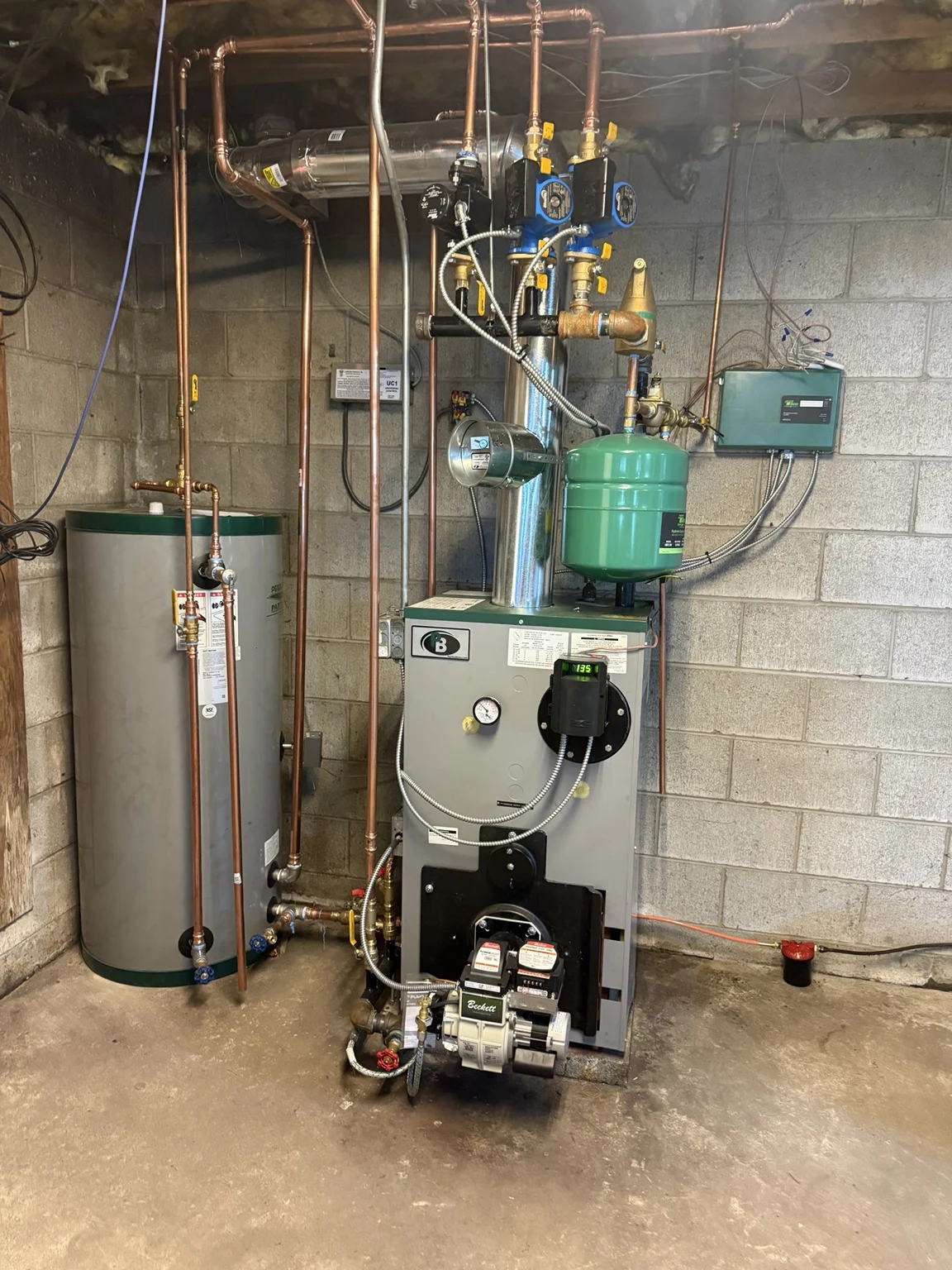
Manufacturer-required risers, header size, equalizer, Hartford Loop, return connections, circulator placement, expansion control, air removal, and purge points determine how the new system performs. A good boiler connected to poor piping is still a poor heating system.
Oil and gas systems require different planning
Fuel does not change the need for correct boiler sizing and system piping, but it changes the burner, fuel supply, venting, controls, combustion setup, and service requirements. Top Shelf evaluates the existing chimney or approved venting arrangement, available utilities, equipment condition, and the practical long-term service plan before recommending an oil or gas replacement.
An indirect water heater becomes part of the boiler system
When a hydronic boiler also heats an indirect tank, the boiler capacity, tank coil, circulator, pipe size, control strategy, and household hot-water demand must work together. A dedicated priority zone can temporarily direct boiler output to the indirect for recovery, then return control to the space-heating zones.
Built for future service
Valves, drains, unions, controls, filters, and access points are arranged so the equipment can be tested and maintained. Startup includes checking operating pressure or temperature, safety controls, venting, system circulation, and leaks.