
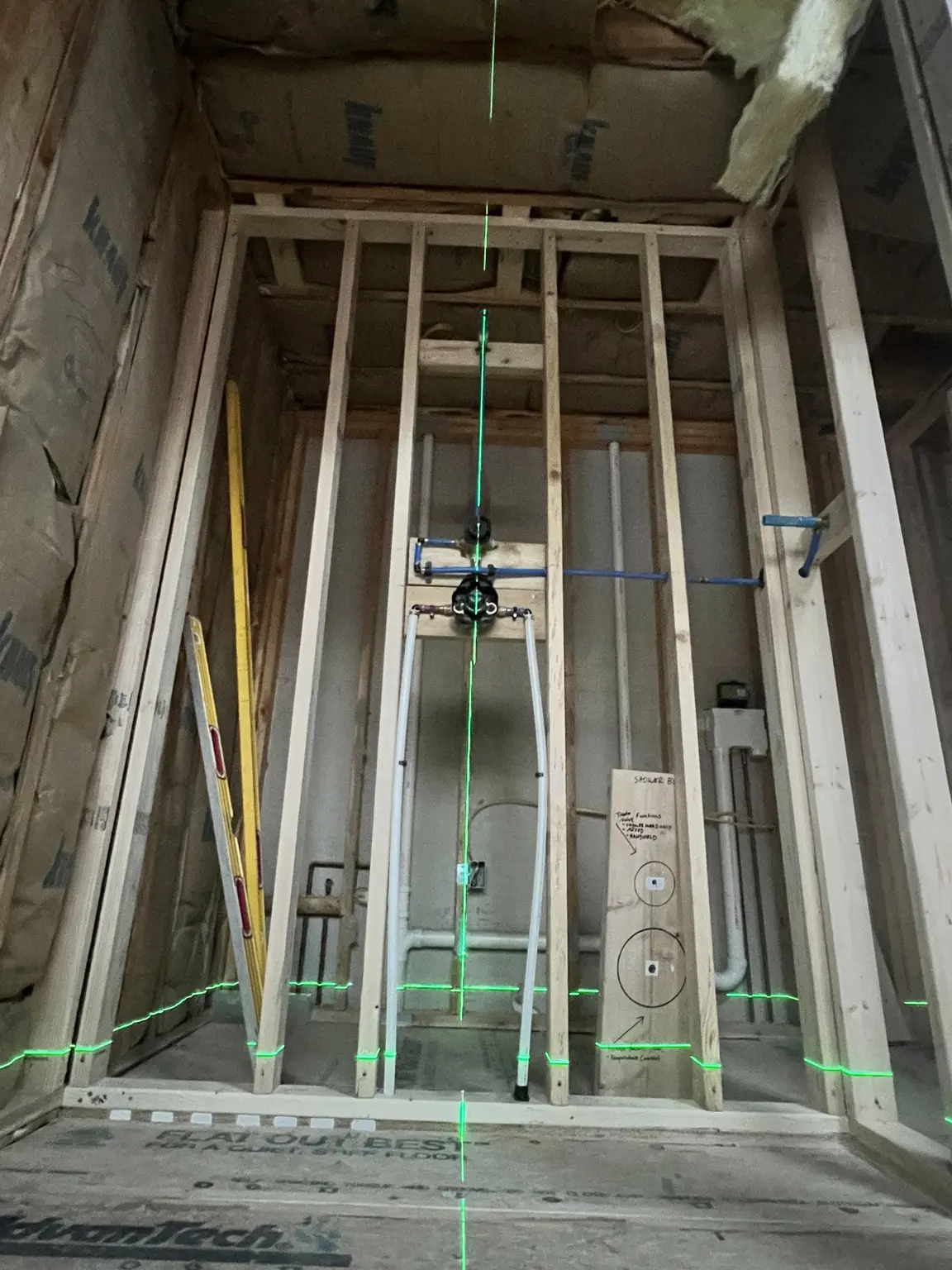
Specialized water and gas repiping from Top Shelf
- Copper and PEX water-line replacement
- Partial and whole-home water repiping
- Galvanized water-line replacement planning
- Low-pressure and restricted-flow diagnosis
- Main shutoff and branch isolation upgrades
- Black-steel gas-piping installation and alterations
- Gas-appliance branch sizing and connections
- Pipe support, protection, testing, and labeling
Partial repipe or whole-home repipe?
One accessible leak may justify a targeted repair. Recurring leaks, widespread galvanized restriction, poor flow under demand, inaccessible shutoffs, mixed weak materials, or a planned renovation can make a phased or whole-home repipe more practical. Greg checks the visible piping, static and flowing pressure, fixture demand, access, and failure history before defining the scope.
Plan new water lines around actual demand
New branches and mains are sized around developed length, available pressure, fixture demand, and simultaneous use. The plan also considers where walls or ceilings are already open, where isolation valves will be useful, and how to avoid leaving a critical bottleneck in the old piping.
Gas piping sized for the connected appliances
A new range, dryer, water heater, boiler, or other gas appliance cannot be sized from the connection diameter alone. The connected input, developed length, available gas pressure, other appliances, manufacturer instructions, routing, protection, and required testing all affect whether the proposed branch is workable.
A clear scope before piping work begins
Repiping can involve access openings, temporary water interruptions, equipment disconnection, permits or inspections, and restoration by another trade. The estimate identifies the piping included, planned material, accessible route, testing, and important exclusions so the homeowner can compare the project on more than price alone.