
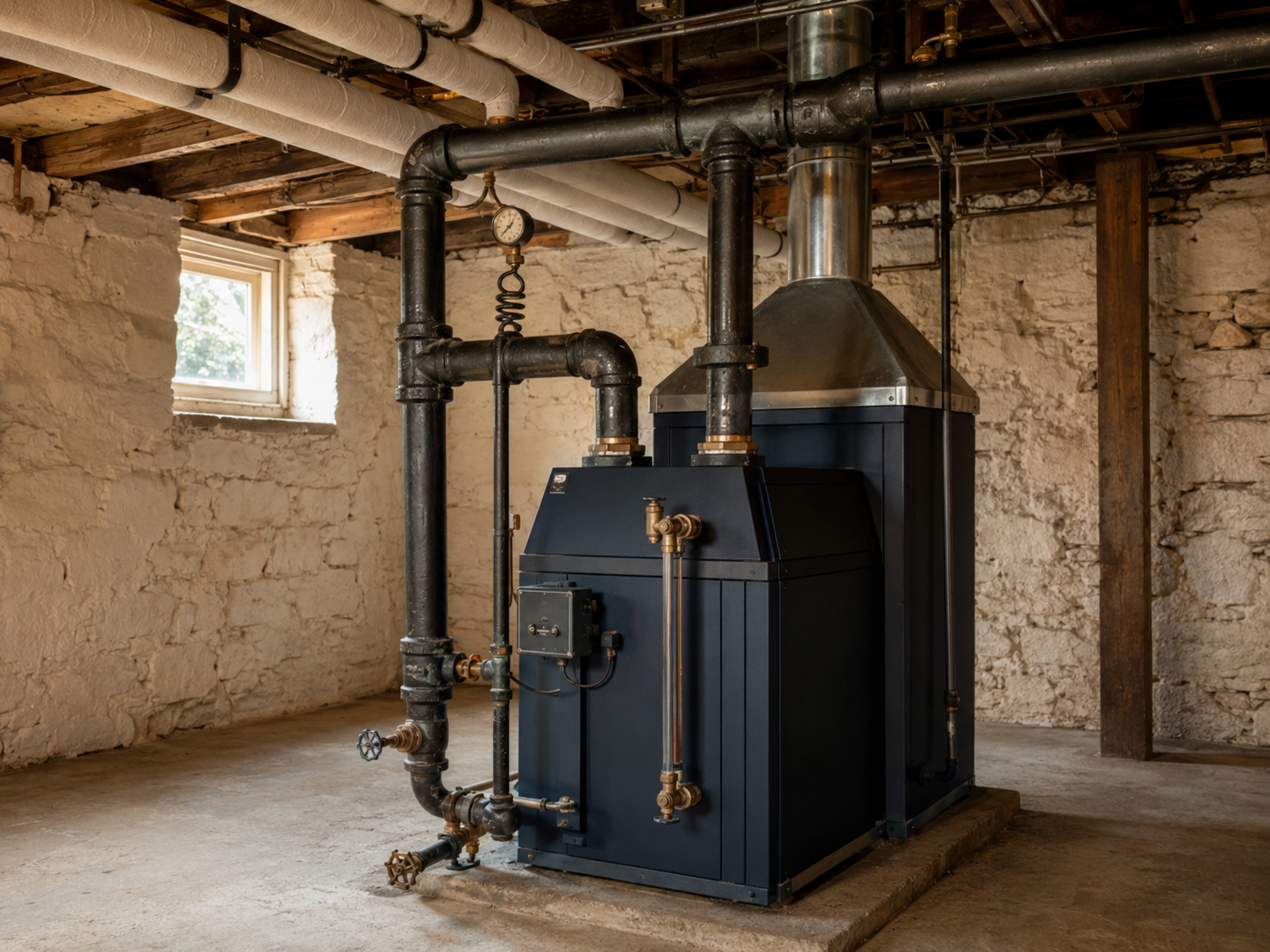
Water expands when heated. In a closed hydronic heating system, the expansion tank provides a compressible air cushion that accepts the increased water volume and keeps system pressure within a safe operating range.
This guide is based on Greg’s field experience diagnosing and repairing plumbing, steam, and hydronic systems in Scranton-area homes. Site conditions and equipment instructions control the final recommendation.
Diaphragm and steel compression tanks
Modern diaphragm tanks separate system water from a precharged air chamber. Older systems may use a larger steel compression tank without a diaphragm. Both serve the same basic purpose, but they are tested and maintained differently.
Signs of an expansion problem
Pressure that starts normal when cold and rises sharply as the boiler heats is a common clue. The relief valve may discharge, the pressure gauge may approach 30 psi, or air problems may return after the system cools.
Correct charge and connection matter
A diaphragm tank should be sized for the system volume and temperature and charged to match the cold fill pressure before it is exposed to system pressure. Its connection point and relationship to the circulator also affect system pressure behavior.
Hydronic Boiler Repair & Installation Scranton, PA
Scranton hydronic boiler repair and installation for no heat, circulators, zones, pressure, expansion tanks, baseboard, radiators and indirect water heaters.
Frequently asked questions
Can an expansion tank be recharged?
Sometimes. The tank must be isolated from system pressure and tested for a failed diaphragm before recharging.
Will replacing the relief valve fix high pressure?
Not if the expansion tank, fill valve, or another pressure problem caused the valve to open.