
Specialized steam boiler replacement from Top Shelf
- Connected-radiation survey and EDR calculation
- Boiler selection based on system demand
- Manufacturer-required boiler risers and header
- Equalizer and Hartford Loop piping
- Main connections, drips, and return evaluation
- Chimney, vent connector, combustion-air, and gas-supply review
- Low-water cutoff and pressure-control setup
- Accessible skim port, drains, flushing, and system cleaning
- Startup, safety testing, and operating review
What happens when you request an estimate
- Send the property location, current symptoms, boiler make and model, and photos of the boiler and surrounding piping.
- Greg reviews the request and arranges an on-site assessment. Connected radiator EDR, distribution, returns, venting, utilities, and access inform the replacement plan.
- Receive a written proposal identifying the boiler, piping, controls, startup, included corrections, and exclusions. Photos help prepare for the visit; final sizing and scope depend on the assessment.
Explore steam repair, replacement, maintenance, or Scranton service information.
Size the boiler to the connected radiation
Steam boilers are matched to the connected radiator load. Each radiator is measured and converted to equivalent direct radiation, or EDR, then the total is compared with the boiler’s net steam rating. Copying the old boiler size, using only the building square footage, or sizing from the input rating can produce an oversized boiler that short-cycles, builds unnecessary pressure, and carries water into the mains.
Survey the existing system before selecting equipment
The evaluation should identify one-pipe or two-pipe distribution, radiator changes, main sizes, takeoff heights, return condition, venting, chimney or approved vent path, gas-supply capacity, available boiler-room height, and service access. A replacement plan that ignores the connected system can repeat the same noise, water-loss, and uneven-heating problems with new equipment.
Follow the manufacturer’s near-boiler piping instructions
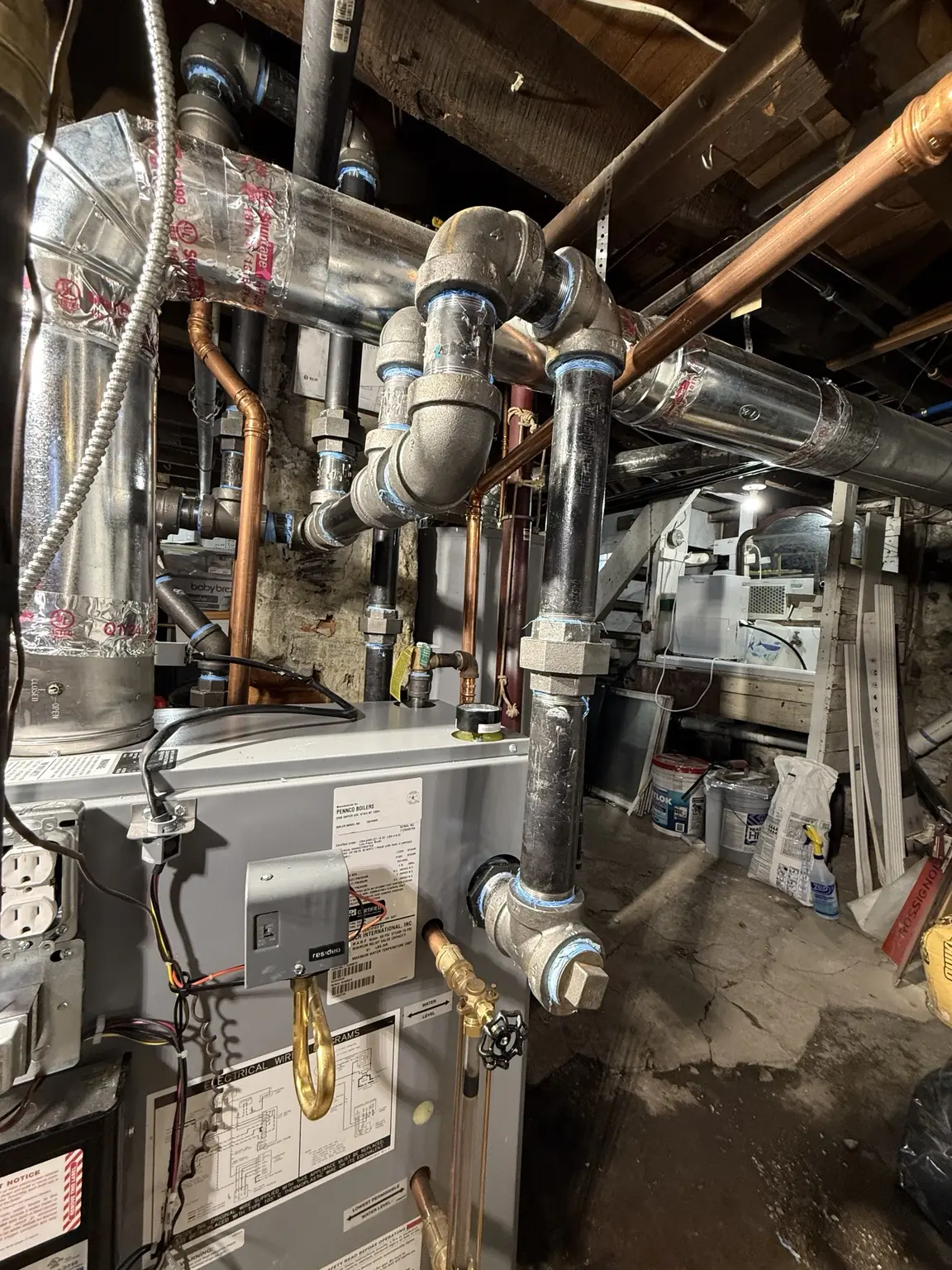
The required boiler risers, header diameter, system takeoffs, equalizer, Hartford Loop, and return connections help separate water from steam before it reaches the mains. Top Shelf treats the manufacturer’s piping diagram as the minimum. When both boiler outlets or additional height improve the installation and fit the approved arrangement, the piping is planned around those requirements instead of the easiest connection to the old mains.
Evaluate returns, venting, and controls with the boiler
A deteriorated wet return, slow condensate, undersized main venting, restricted pigtail, unreliable low-water cutoff, damaged vent connector, or inadequate gas supply can undermine a new boiler. Existing components are evaluated and the proposal should state what is being reused, corrected, or replaced. An automatic water feeder may be useful when appropriate, but it does not replace a working low-water cutoff and is not automatically included in every replacement.
Compare replacement proposals by scope—not only boiler price
Useful proposals identify the selected boiler and net steam rating, near-boiler pipe sizes and arrangement, return work, venting and gas scope, controls, skim and drain provisions, startup, and any excluded repairs. Two quotes using similar equipment can represent very different installations when one omits the header, return corrections, skimming, controls, or required system work. Permits and optional improvements should be stated rather than assumed.
Skimming and startup finish the installation
New boiler sections and threaded piping introduce oils that can make the waterline surge and produce wet steam. The boiler is filled, fired, skimmed, flushed as appropriate, set for low-pressure operation, and tested through its safety and operating sequence. Residual oil or debris can sometimes require additional attention after the system has operated, which is why accessible skim and drain connections matter.
Real Scranton steam-boiler workmanship
Top Shelf’s completed Pennco 16 Series project used dual boiler risers, a full-size black-steel header, the proper equalizer and Hartford Loop, replacement wet-return piping, venting improvements, skimming, testing, and system balancing. The related project page shows the actual installation rather than a stock boiler-room image.