
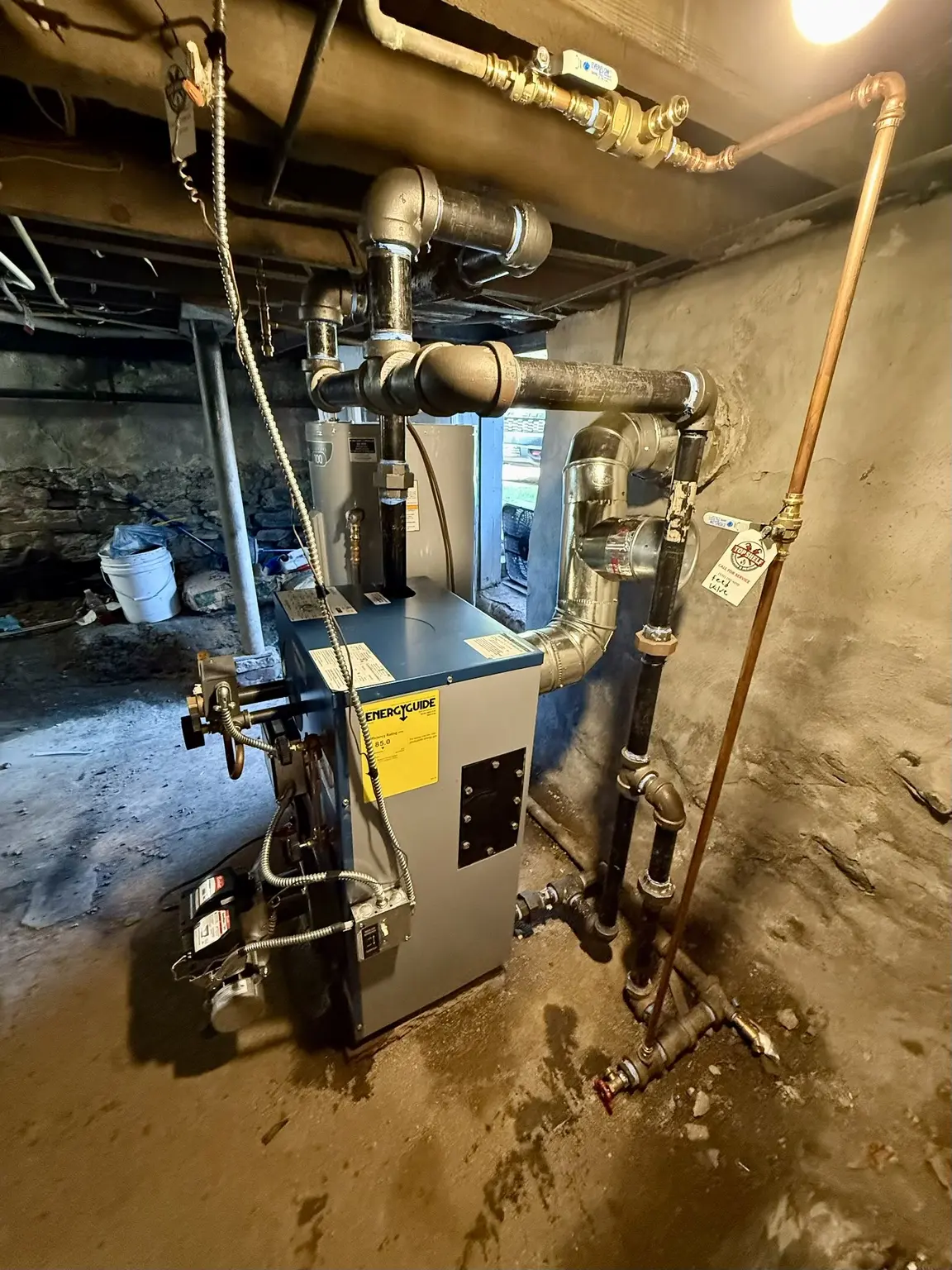
Specialized steam boiler repair from Top Shelf
- No-heat and uneven-heating diagnostics
- Banging pipes, wet steam, and water hammer
- Main vents, radiator vents, and slow steam distribution
- Water loss, flooding, feeders, and unstable waterlines
- Wet returns, Hartford Loops, and condensate-return problems
- Pressure controls, pigtails, low-water cutoffs, and gauges
- Near-boiler piping and header evaluations
- Steam boiler maintenance and safety checks
A system-level steam diagnosis
A steam boiler, its near-boiler piping, mains, vents, radiators, and returns operate as one system. Greg checks when and where the problem appears, boiler-water behavior, pressure response, venting, piping pitch, return condition, and control operation before recommending corrective work.
No heat requires a sequence—not a guess
A no-heat call can involve the thermostat, service switch, fuel supply, burner controls, low-water cutoff, pressure control, blocked pigtail, automatic feeder, or a condition that has placed the boiler in a safety shutdown. The diagnostic process follows the operating sequence and verifies the failed condition before a part is recommended. Repeatedly resetting a boiler without finding the cause can hide an unsafe or damaging problem.
Common problems in older Scranton homes
Older one-pipe and two-pipe systems may have lost pipe pitch, clogged wet returns, failed vents, oversized replacement boilers, restricted pigtails, or altered radiator valves. The goal is quiet distribution, dry steam, low operating pressure, and reliable condensate return.
Water loss and unstable waterlines need an explanation
Fresh make-up water accelerates corrosion, so a steam boiler that regularly needs water should not be treated as normal. Visible radiator and valve leakage, buried or exposed returns, feeder operation, delayed condensate, surging, and leakage above the normal waterline all deserve evaluation. The repair should address why the water is leaving or why the level appears unstable.
Repair first when the boiler remains serviceable
A failed vent, control, pigtail, feeder, valve, return, or accessible piping section can often be repaired without replacing a sound boiler. Replacement becomes a separate discussion when the boiler section is leaking, the equipment is unsafe or no longer serviceable, repeated failures make repair poor value, or the existing boiler is incorrectly sized and badly piped. Greg separates the immediate repair from optional system improvements so the scope is clear.
Clear findings and a tested result
You receive a direct explanation of what was found, what needs attention now, and what can be planned for later. Completed repair work is tested through the relevant operating sequence, including the waterline, pressure response, safety controls, heat distribution, and visible connections within the service scope.